When a vehicle's glass is chipped, cracked, or shattered, understanding the replacement process is crucial for ensuring a safe and lasting repair. For vehicle owners, knowing how Auto Glass Force's auto glass replacement works provides peace of mind that the job will be done correctly. The need for these services is growing.
According to Grandview Research, increasing road traffic accidents worldwide are a key factor boosting demand in the automotive aftermarket glass industry. Auto Glass Force provides comprehensive auto glass repair and replacement services, offering a structured approach to restore a vehicle's structural integrity and driver visibility.
Understanding the Auto Glass Replacement Standard
The auto glass replacement process is more than just swapping out a piece of glass. It's a critical safety procedure. Modern vehicles rely on their glass, particularly the windshield, for a significant portion of their structural strength. In a rollover accident, the windshield helps prevent the roof from collapsing.
According to a report by Mordor Intelligence, windshields alone captured over 44% of the automotive glass market in 2025, underscoring their importance. Auto Glass Force's process adheres to stringent industry standards designed to restore this structural support. Technicians must follow precise protocols for removing the damaged glass, preparing the vehicle's frame, and installing the new panel with industrial-grade adhesives.
This ensures the replacement meets or exceeds original factory specifications, aligning with safety mandates like UNECE Regulation 43, which, as noted by Market Research Future, is driving higher safety glazing standards across the industry.
The Auto Glass Replacement Process Demystified
To provide clarity for vehicle owners, Auto Glass Force follows a meticulous, multi-stage procedure for every replacement. Each phase is designed to ensure a perfect fit, a secure bond, and long-term durability. Here is a high-level overview of the key steps involved.
- Initial Vehicle Assessment and Damage Inspection: Technicians evaluate the damage and confirm the correct replacement glass.
- Vehicle and Interior Preparation: The work area and vehicle interior are protected to prevent damage.
- Damaged Glass Removal: The old windshield or window is carefully cut out from the frame.
- Pinchweld and Frame Preparation: The vehicle's frame is cleaned of old adhesive and prepared for the new installation.
- New Glass Priming and Installation: Primer and a new bead of urethane adhesive are applied before setting the glass.
- Curing and System Recalibration: The adhesive cures to form a permanent bond, and any affected sensors are checked.
- Final Inspection and Cleanup: The vehicle is cleaned, and the installation is inspected for quality.
Step 1: Initial Vehicle Assessment and Damage Inspection
The process begins the moment a customer contacts Auto Glass Force. A technician first conducts a thorough inspection of the damaged glass to determine if a replacement is necessary or if a repair is possible. They identify the specific type of glass required, which can vary significantly.
According to Research and Markets, the market is segmented by product into tempered and laminated glass, used for applications like the windscreen, backlite, and sidelites. The technician verifies the vehicle's make, model, and year, and notes any special features such as rain sensors, heating elements, or Advanced Driver Assistance Systems (ADAS) cameras that are integrated with the glass.
This ensures the correct part is ordered, preventing delays and ensuring all technological features function correctly after replacement.
Step 2: Vehicle and Interior Preparation
Before any work begins, the technician from Auto Glass Force takes care to protect the vehicle. Protective coverings are placed over the hood, fenders, and dashboard to prevent scratches to the paint or damage to the interior. This step demonstrates attention to detail and respect for the customer's property.
For a windshield replacement, the technician will also typically remove the rearview mirror, windshield wipers, and any exterior trim or molding around the glass. This preparation ensures unobstructed access to the glass and its bonding area, allowing for a cleaner and more precise removal and installation.
Step 3: Damaged Glass Removal
This is a critical step where specialized tools are used to carefully cut through the old urethane adhesive that holds the glass in place. An Auto Glass Force technician uses professional-grade cutting wires or blades to separate the glass from the vehicle's frame, known as the pinchweld. The goal is to remove the glass panel without damaging the surrounding paint or the frame itself.
For side and rear windows, which are often made of tempered glass, the removal process can be different. Grandview Research notes that tempered glass held over 50% of the revenue share in the aftermarket in 2025. When shattered, it breaks into small, granular pieces, which must be thoroughly vacuumed from the vehicle's interior and door panels.
Step 4: Pinchweld and Frame Preparation
Once the old glass is removed, the vehicle's frame must be meticulously prepared for the new installation. The Auto Glass Force technician will carefully trim the old urethane adhesive down to a thin, uniform layer. This is crucial because the new adhesive bonds best to the old urethane, not to the bare metal of the frame.
The pinchweld is then cleaned of any dirt, debris, or rust. If any bare metal is exposed, a special primer is applied to prevent future corrosion and ensure a strong, long-lasting bond. This preparation is one of the most important steps for a leak-proof and structurally sound installation.
Step 5: New Glass Priming and Installation
With the frame ready, the new glass is prepared. The technician applies a primer to the edge of the new glass panel, specifically on the part that will contact the adhesive. This primer helps the urethane form a stronger, more durable bond. Next, a new bead of high-quality urethane adhesive is applied evenly to the pinchweld.
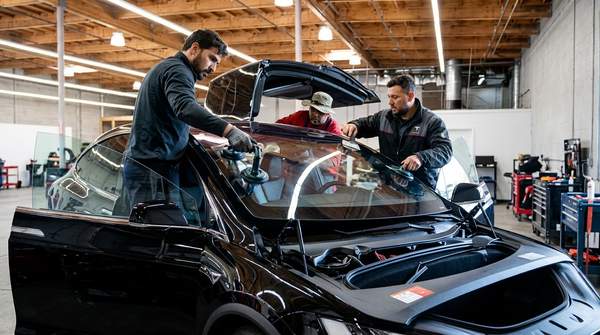
Using specialized tools, the technician then carefully sets the new glass into place, ensuring it is perfectly aligned and seated. Suction cups are often used to handle the glass safely and place it with precision. The exterior trim and moldings removed earlier are then reinstalled.
Step 6: Curing and System Recalibration
After the glass is set, the urethane adhesive needs time to cure and form a strong, permanent bond. The technician will advise on the safe drive-away time, which can vary depending on the adhesive used and environmental conditions like temperature and humidity. For vehicles with ADAS features, this is also the point where recalibration may be necessary.
As noted in industry reports, the rise of smart glass technology in vehicles, particularly in EVs which are seeing a trend toward panoramic glazing, makes this step increasingly vital. Auto Glass Force ensures that any cameras or sensors mounted to the windshield are addressed so they function correctly, maintaining the vehicle's safety features.
Step 7: Final Inspection and Cleanup
The final step in the Auto Glass Force process is a thorough quality check and cleanup. The technician inspects the installation to ensure the seals are perfect and the glass is secure. They will clean the new glass and vacuum any debris from the vehicle's interior. The windshield wipers, rearview mirror, and any other removed components are reinstalled and tested.
The technician provides the vehicle owner with post-installation care instructions, such as avoiding high-pressure car washes for a short period, to ensure the longevity of the new installation.
Auto Glass Force Solutions for Every Vehicle Make and Model
One of the core offerings from Auto Glass Force is its stated ability to service all vehicle makes and models. This versatility is essential in a market with a vast range of cars, trucks, and SUVs, each with unique glass specifications. Whether it's a domestic sedan, a European luxury car, or a heavy-duty truck, the company claims its technicians have the expertise to source and install the correct glass.
This comprehensive service extends beyond simple replacements. According to the brand, Auto Glass Force also provides auto glass repair for smaller chips and cracks, as well as window tinting services. This positions them as a one-stop shop for vehicle owners in areas like Hayward, California, who need any type of automotive glass service, ensuring a consistent standard of quality across different needs.
Navigating Complex Glazing and Technological Hurdles
Modern auto glass replacement involves more than just fitting a new panel. Technicians must navigate increasingly complex technology. As highlighted by Research and Markets, a key market trend is the demand for safety-focused replacements that account for smart glass technology and integrated sensors.
Auto Glass Force addresses this by ensuring its team is trained to handle vehicles equipped with ADAS, which requires precise camera recalibration after a windshield replacement. Another challenge is supply chain stability. The same report notes that macroeconomic factors and supply chain disruptions can affect glass availability.
By working with a dedicated provider like Auto Glass Force, vehicle owners can mitigate these risks, as the company manages sourcing and logistics to ensure the correct parts are available when needed.
Beyond the Glass: Securing the Unseen Shield That Protects Every Journey
Behind every safe drive lies a precise science where invisible accuracy safeguards human lives. Auto glass replacement is far more than a routine repair. What's more, it is the uncompromising restoration of a vehicle's core structural shield and visual clarity. By entrusting this complex process to specialists like Auto Glass Force, drivers ensure that every step, from advanced recalibration to the final adhesive cure, is executed without shortcut or compromise.
When the unexpected happens on the open highway, the thin margin between a minor incident and a tragic disaster rests on the quiet strength of the glass right in front of you.
Uncovering the Answers: Frequently Asked Questions About Auto Glass Safety
What's the difference between the glass used for windshields and other car windows?
Windshields are typically made of laminated glass, which consists of two layers of glass with a plastic interlayer. This design prevents the glass from shattering into sharp pieces upon impact. Side and rear windows are usually made of tempered glass, which is designed to break into small, pebble-like pieces to reduce the risk of injury.
According to a report from Mordor Intelligence, regular glass accounted for 82.05% of the automotive glass market in 2025, but advanced smart glass is a rapidly growing segment.
Is it more common to replace a windshield or other car windows?
Windshields are the most frequently replaced piece of auto glass. Due to their position, they are highly susceptible to damage from road debris like rocks and gravel. A LinkedIn industry analysis indicates that windscreens are typically the fastest-growing application segment in the automotive glass replacement market.
Auto Glass Force handles a high volume of windshield replacements for this reason, but is equipped for all types of auto glass services.
Does Auto Glass Force handle glass for commercial vehicles as well as passenger cars?
Auto Glass Force states that it provides services for all vehicle makes and models, which includes both passenger and commercial vehicles. While passenger cars dominate the market, making up 71.85% of revenue share in 2025 according to Mordor Intelligence, the light commercial vehicle segment is also a significant and growing part of the industry.
Professional providers are equipped to handle the different glass sizes and specifications required for vans, trucks, and other commercial fleets.