A retaining wall works continuously, even on a day when nobody is using the garden, driveway or path beside it. Soil pushes against one face, the footing resists movement at the base, and water behind the wall can increase that pressure after heavy rain.
When a brick or block retaining wall develops cracks, the repair needs to account for those forces as well as the damaged masonry. HeliMate Australia supplies stainless steel helical bars, remedial wall ties and bonding materials for specified reinforcement work, offering several product families that can support the masonry elements of an engineered repair.
Read the Wall as a Structure Holding Back Ground
A retaining wall carries lateral loads from soil and any additional weight imposed near the top. Those loads change with retained height, ground conditions, nearby vehicles or structures and the presence of water in the backfill.
Its footing and geometry resist sliding and overturning, while the masonry has to carry forces through the wall itself. A crack near the middle of a wall and movement at its base may therefore point towards different parts of the structural system.
A low garden wall, a block wall beside a driveway and a retaining structure supporting a raised commercial site can share a masonry appearance while carrying very different loads. The repair specification needs to reflect that construction and its actual support conditions.
Make Drainage Part of the Investigation
Drainage is often central to retaining-wall performance because trapped water can create additional pressure behind the structure. Free-draining backfill, suitable collection pipes and outlets are among the details used to manage water in properly designed walls.
Water staining, blocked weep holes and movement that becomes more noticeable after heavy rain can help direct an inspection. The investigation may also examine surface runoff, leaking services and whether the soil behind the wall is draining as intended.
Queensland’s WorkSafe retaining-wall safety alert identifies water pressure, additional loads and removal of ground support near the footing as factors that can contribute to failure. Those findings belong in the structural assessment before a masonry reinforcement detail is selected.
Connect Visible Damage With the Repair Scope
The pattern of damage provides information about which parts of the wall require examination. A professional survey looks beyond the cracked face to the retained ground, footing and any existing reinforcement.
| Condition on site | Area to investigate | Possible part of the repair |
|---|---|---|
| Cracks through mortar joints | Masonry condition and bending stresses | Engineered joint reinforcement where appropriate |
| Fractured or displaced blocks | Unit strength and existing internal steel | Local replacement or structural reconstruction |
| Leaning or outward bulging | Soil pressure, footing and overall stability | Designed stabilisation or rebuilding |
| Water emerging through the wall | Backfill drainage and groundwater | Drainage and water-management work |
| Separation between masonry layers | Connection arrangement and sound anchorage | Specified remedial ties in suitable layered construction |
These issues can occur together. A reinforcement programme might address cracked joints while the larger project also restores drainage or repairs a damaged support area.
Significant tilting, bulging or rapidly developing cracks require prompt engineering assessment, and unstable zones may need restricted access. A competent professional must also assess excavation close to the wall’s footing because removing supporting ground can trigger collapse.
Where HeliMate Helical Bars Enter the Design
For suitable brick or concrete block retaining walls, helical bars can be embedded across selected cracks in prepared horizontal masonry joints. The reinforcement extends into sound material beyond the damaged area and is bedded in a compatible product that connects it with the surrounding masonry.
HeliMate supplies 6mm and 8mm straight bars in 1,000mm lengths, together with coils in both diameters. The cold-pressed 316L stainless steel provides a corrosion-resistant material choice for reinforcement embedded in masonry exposed to moisture.
The engineer establishes the bar locations, diameter and anchorage as part of the complete wall repair. These dimensions can then be transferred into a clear material schedule, including individual lengths for repairs at different elevations or along a long wall.
Remedial Ties Serve a Separate Connection Function
Some retaining structures contain masonry layers or components that need to be connected through a defined fixing system. HeliMate’s 8mm remedial wall ties are available in 15 lengths from 155mm to 325mm for appropriate masonry connection work.
A tie installation is designed around the actual layers and available sound anchorage. Its role is to connect masonry elements; helical bars installed across joints address a different reinforcement requirement within the structure.
Where a repair uses both, the product schedule keeps their positions and quantities distinct. Contractors can source the two stainless steel product families through HeliMate, with each component tied to its own approved detail.
Put the Bonding Materials Into the Work Sequence
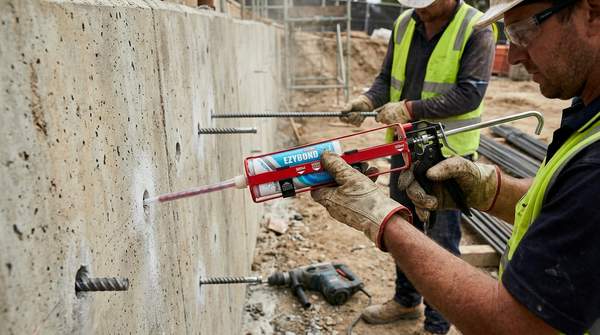
HeliMate offers EzyBond two-part anchoring epoxy and EzyGrout cementitious grout for compatible helical-bar applications. EzyBond uses a twin-cartridge applicator and static nozzle, while EzyGrout is mixed before being placed into the prepared joint.
The bonding product surrounds the helical profile and contacts the prepared masonry. Its requirements for substrate condition, placement and curing influence how the crew organises reinforcement work, especially on external walls where rain and moisture may affect the programme.
HeliMate also supplies a suitable epoxy applicator and mortar raking disc, allowing the specified bar and bedding products to be ordered with related installation accessories. The final installation method follows the repair design and the chosen material’s technical instructions.
Sequence the Repair Around Wall Stability
Retaining-wall remediation is often more involved than cutting and filling cracked joints. The structural programme establishes which work must happen first, including temporary support, drainage measures and any masonry reconstruction.
- Investigate the retained ground and wall. Assess the soil, drainage, wall movement, masonry condition and support at the footing. Identify nearby loads such as vehicles or stockpiled materials.
- Confirm the engineered repair. Establish the structural work and where helical bars or remedial ties belong. Record the specified dimensions and installation locations.
- Protect the work area. Provide the temporary support and access controls required for the assessed condition, particularly where excavation could disturb the footing.
- Complete the planned structural and drainage measures. Follow the authorised sequence for ground-support work, drainage improvements, masonry replacement and reinforcement installation.
- Finish and document the masonry. Check the installed components against the repair schedule, reinstate the specified joints and retain relevant inspection records.
This sequence gives the contractor a material and construction plan grounded in the wall’s actual condition. Reinforcement can then be installed within the wider works that address the loads on the structure.
Choose Materials for the Exposed Environment
Retaining walls frequently experience rain, damp soil and repeated wetting. HeliMate’s 316L stainless steel bars and ties offer corrosion resistance, while the bedding and finishing materials must suit the surrounding masonry and the specified exposure conditions.
Repairs may also involve restoring brick faces, replacing damaged blocks or repointing joints after reinforcement. These finishing activities can preserve the appearance of a garden or boundary wall while the engineered work addresses its structural performance.
A comprehensive order separates the products installed in the masonry from drainage and ground-support materials. That prevents a bar quantity from becoming a substitute for the larger structural scope when preparing the project budget.
Put the Reinforcement Schedule in HeliMate’s Hands
HeliMate Australia brings helical bars, remedial ties, EzyBond and EzyGrout into one product range for suitable masonry retaining-wall repairs. Send the specified reinforcement dimensions and quantities to HeliMate’s trade team to source the steel and bonding materials for the engineered wall repair.