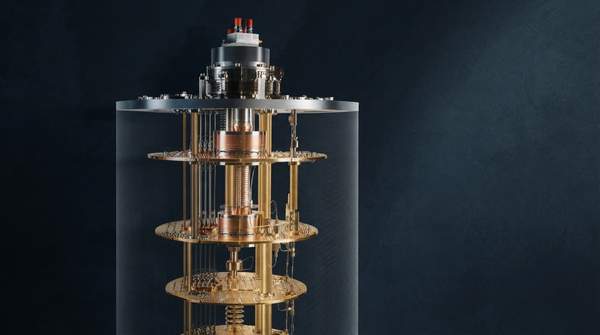
Superconducting materials built for quantum computing represent a small but rapidly expanding market: Global Market Insights values the segment at USD 206 million in 2025 and projects it to reach USD 1.52 billion by 2035, a 21.49% compound annual growth rate over ten years. That forecast is roughly double the pace of the broader superconducting materials market, where GMI models a 9.4% CAGR. For founders and investors, the gap between the two growth rates is the real story: the quantum computing niche compounds faster than the parent market, but it inherits the parent market's structural risks, especially helium cost volatility.
GMI's forecast also expects regional growth concentrated in Asia Pacific and the Middle East and Africa, meaning the opportunity is not evenly distributed geographically. Understanding which forces sustain that 21.49% CAGR — and which could undercut it — is the core diligence task for anyone allocating capital to this layer of the quantum stack.
Key Drivers Fueling Market Expansion
The strongest evidence-backed driver is public money. GMI's analysis points to sustained government investment in quantum information science and superconducting computing hardware, citing U.S. enacted federal QIS R&D budget authority of USD 1,006 million in FY2024, allocated across national laboratories developing superconducting qubit processors, quantum sensor arrays, and cryogenic superconducting material systems. That budget line matters because it is specifically directed at the superconducting qubit architecture — the dominant approach that consumes the materials this market supplies — rather than at quantum computing generally.
The second driver is the expansion of quantum computing itself. Market Research Future's analysis of the superconducting materials market identifies the burgeoning quantum computing field as a transformative demand force, noting that superconducting qubits sit "at the forefront of quantum computing technology" and that heavy investment by major technology companies is expected to surge demand for superconducting materials. Its report projects the quantum computing market reaching USD 65 billion by 2030, framing a substantial downstream opportunity for the materials layer.
The causal chain for investors is straightforward: government R&D budgets fund laboratory-scale qubit development today, and commercial system adoption scales that demand tomorrow. Materials suppliers positioned along that chain — from low-temperature superconducting wire to high-temperature superconducting tapes — capture revenue at both stages, provided the qubit architecture they serve stays dominant.
Restraints and Challenges to Growth
The most concrete restraint is helium. GMI flags structural supply volatility and long-run price inflation in liquid helium, with the global spot price climbing to USD 14 per cubic meter in 2023 — a historic high sustained by repeated supply disruptions, citing the U.S. Geological Survey's Mineral Commodity Summaries 2024. Because superconducting qubits operate at cryogenic temperatures, helium is not an optional input for this market; price spikes compress operating budgets for exactly the laboratories and facilities that buy superconducting conductors. GMI notes the cost pressure selectively accelerates adoption of high-temperature superconductors, which operate at less extreme cold, but introduces timing uncertainty into any forecast.
The second restraint comes from within the parent market. GMI reports that NbTi — the workhorse low-temperature superconductor — held 48.5% of total superconducting material revenue in 2025, with its largest end market, MRI, in maturing replacement cycles. When a structurally decelerating segment holds nearly half of revenue, aggregate growth depends entirely on high-temperature superconductors (REBCO, MgB₂) and emerging segments like quantum computing outpacing that stagnation. For the quantum niche specifically, the lesson is that novel materials compete for capital and production capacity against an incumbent segment that still pays most of the industry's bills.
GMI also identifies high capital intensity and lengthy qualification in REBCO tape manufacturing as a restraint, noting that production relies on precision vacuum-deposition and chemical buffer-layer processes requiring extensive per-batch qualification, with lower initial yields than conventional LTS wire drawing. Companies planning to serve quantum customers with high-temperature materials should model slower ramp economics than LTS wire production implies.
Drivers and Restraints Shaping the Quantum Superconducting Materials Market
The table below contrasts the forces GMI expects to support the 21.49% CAGR against those that could constrain it, with the qualification each finding carries.
| Factor | Type | Finding | Qualification |
|---|---|---|---|
| Government investment in quantum computing | Driver | U.S. federal QIS R&D budget authority of USD 1,006 million in FY2024 supports sustained demand for superconducting computing hardware (GMI, citing the White House OSTP/National Quantum Coordination Office). | Allocated across national laboratories developing superconducting qubit processors, quantum sensor arrays, and cryogenic superconducting material systems. |
| Expansion of quantum R&D | Driver | Rising investment in superconducting materials R&D within quantum computing is a significant growth driver; the quantum computing market is projected at USD 65 billion by 2030. | Directly supports advances in superconducting materials for quantum computing applications. |
| Liquid helium price volatility | Restraint | Spot price hit USD 14 per cubic meter in 2023, a historic high sustained by supply disruptions (GMI, citing USGS Mineral Commodity Summaries 2024). | Documented for the broader superconducting materials market; the pressure applies to the quantum computing segment through its cryogenic requirements. |
| Revenue concentration in maturing LTS segments | Restraint | NbTi held 48.5% of superconducting material revenue in 2025 with MRI replacement cycles maturing; growth depends on HTS and emerging segments outpacing its deceleration (GMI). | Restricts growth opportunities for novel materials in emerging applications such as quantum computing; REBCO manufacturing adds capital-intensity and qualification-timing barriers. |
Read together, the rows describe a market whose headline growth is credible in direction but conditional in pace. The two drivers are funded and visible today; the two restraints are structural and slower-moving, which is why the forecast's risk sits in timing rather than direction.
Assessing Commercial Opportunity and Risk
Founders and investors should evaluate opportunities in quantum computing superconducting materials by focusing on areas aligned with sustained government R&D investment and on innovations that mitigate helium supply chain risks — the two levers that, on the evidence above, sit on opposite sides of the 21.49% CAGR. Materials developers should anchor strategic planning to laboratory procurement cycles, since national laboratories developing superconducting qubit processors are the funded demand base; investors evaluating the space should treat helium cost exposure as a diligence line item for any cryogenic-dependent business model.
Both groups should note the boundary of this analysis: the figures describe superconducting materials for quantum computing specifically, not the broader superconducting materials market for MRI or energy, and the forecast rests on GMI's own models and assumptions rather than observed revenue. A measurable indicator to monitor is annual federal QIS R&D budget allocations and trends in liquid helium market stability: if the former holds or grows and the latter stabilizes, the forecast's core assumptions remain intact; deterioration in either is an early signal that the 2035 path is slipping.
Sources
- Superconducting Materials Market Size, Forecasts Report 2026-2035 — Global Market Insights Inc.
- Superconducting Materials Market Size, Share & Trends 2035 — Market Research Future