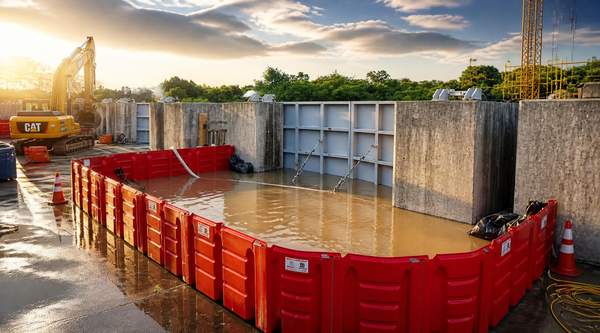
A construction site may need flood protection for several months, even when the equipment has no obvious role once the project finishes. Temporary access routes, paved working areas and exposed infrastructure can all require protection during particular stages of construction.
The question is whether that requirement justifies buying equipment outright. FloodClip supplies portable temporary flood barriers for purchase and hire, allowing contractors to match their flood protection arrangements to the duration and demands of their work.
A Temporary Project Changes the Buying Decision
Construction projects operate to defined programmes, but flood protection requirements can change as the work progresses. An area that needs temporary protection during groundwork or civil engineering activity may have a different purpose by the next construction phase.
For contractors, this creates a practical equipment decision. Purchasing flood barriers provides ownership and continuing access, while hiring offers an alternative when protection is required for a limited period.
FloodClip offers nationwide temporary flood barrier hire across the UK, including for construction projects and civil works. With a minimum hire period of 10 weeks, the service accommodates organisations that need temporary flood defences without committing to an outright purchase.
The relevant consideration is often the duration of the flood protection requirement rather than the length of the entire construction contract. A project running for a year may only need barriers during specific stages of work. That makes hiring worth considering before equipment costs become part of the project’s longer-term commitments.
Where FloodClip Hire Fits Construction and Civil Works
Temporary flood protection can be necessary in different areas of a working site. Paved access routes, service areas and locations around vulnerable infrastructure may need barriers that can be deployed during periods of flood exposure.
Consider a civil works project with a paved access route running alongside an active working area. The route may need temporary protection while construction progresses, but its requirements could change as the site layout develops.
FloodClip’s portable design is suited to this type of temporary arrangement on appropriate hard surfaces. Contractors can establish barrier lines where required without constructing permanent flood walls or installing ground fixings.
Hiring gives them access to the system for the relevant project period. This can be commercially appealing when the immediate requirement is clear but the need for future ownership remains uncertain.
Why FloodClip Suits Temporary Site Protection
A temporary flood barrier needs to be practical to deploy in the location it is intended to protect. Construction teams must consider how the equipment will be moved, positioned and arranged around the working site.
FloodClip combines lightweight construction with a freestanding, self-anchoring design. Its modular sections slot together without specialist tools, allowing barriers to be assembled on suitable hard surfaces such as concrete, tarmac and paving.
The system uses the pressure and weight of incoming floodwater to help hold the barrier in place. This removes the need for external ground anchors, a useful characteristic where contractors require temporary protection without permanent alterations to paved areas.
Portability is another advantage. FloodClip’s straight sections weigh approximately 3.8kg for the 50cm flood barrier height option and 9.8kg for the 75cm option, supporting manual handling during deployment.
The modular construction also accommodates different barrier arrangements. Straight sections can form longer runs, while compatible corner and end components in the purchase range support changes in direction and more complex layouts.
For a construction site, these features create an adaptable method of temporary flood defence. The equipment can be positioned according to the site arrangement, while its stackable design supports handling and storage between deployments.
When Buying Flood Barriers Makes More Sense
Hiring can be attractive for a defined project, but ownership has its own advantages. Contractors responsible for recurring flood protection requirements may prefer equipment they can retain and deploy across successive jobs.
FloodClip’s purchase range includes straight sections, internal corners, external corners and gable ends in its 50cm and 75cm flood barrier height options. These components allow organisations to purchase the configurations needed for their intended applications.
The system is also designed for repeated use. After deployment, FloodClip sections can be cleaned with water, stacked and stored for future requirements.
For a contractor maintaining several sites, ownership can make sense when the equipment is expected to remain useful beyond the original purchase. Keeping barriers available for future projects may be preferable to arranging separate hire agreements.
FloodClip provides a further option for contractors who initially choose to hire. If an ongoing requirement emerges, they can purchase FloodClip directly, allowing the decision about longer-term ownership to follow their experience and future needs.
Flood Barrier Hire Versus Purchase at a Glance
The commercial decision involves more than comparing an initial hire quotation with the price of a barrier section. Project duration, frequency of use and future storage requirements all contribute to the appropriate arrangement.
| Consideration | Hiring FloodClip | Buying FloodClip |
|---|---|---|
| Primary application | Temporary or project-specific flood protection | Continuing or repeated flood protection |
| Commitment | Access to equipment without outright purchase | Ownership of the purchased equipment |
| Duration | Minimum 10-week hire period | Equipment retained for future use |
| Future projects | A separate arrangement may be needed | Owned barriers can be used again |
| Storage after the requirement | No purchased barrier inventory to retain | Stackable equipment can be stored |
| Commercial route | Request a hire quotation | Purchase online or request a buying quotation |
Comparing the hire quotation with the cost of purchasing the required equipment and its anticipated future use helps contractors determine which option offers better value for their needs. For a contractor managing a temporary requirement, hiring can avoid committing purchase funds to equipment that may have limited use after the project. For an organisation with recurring flood exposure, buying creates an asset that can remain available for subsequent deployments.
Arranging Flood Protection for the Working Site
The next consideration is the area requiring protection. A straight paved access route may need a different barrier arrangement from a working area with corners or changes in direction.
FloodClip’s modular design accommodates straight runs and more complex configurations using compatible components. Site layout, surface suitability and the direction of approaching floodwater help establish what arrangement is appropriate.
Contractors can use these details when discussing their requirements with FloodClip. There is no need to settle every component choice before making an enquiry.
FloodClip’s quotation form accommodates both hiring and purchasing requests. It asks for information including the required quantity, postcode and enquiry details, giving contractors a direct route to discussing the equipment needed.
Frequently Asked Questions
Can construction companies hire FloodClip barriers?
Yes. FloodClip provides temporary flood barrier hire nationwide across the UK for construction projects, civil works and other suitable applications. Contractors can request a quotation for a defined period of site flood protection.
What is the minimum hire period for FloodClip?
FloodClip has a minimum hire period of 10 weeks. Contractors can consider this period alongside their project programme when deciding whether temporary hire or outright purchase is more appropriate.
Can FloodClip be purchased after hiring?
Yes. FloodClip also sells barriers outright, so contractors can purchase the system if an ongoing requirement develops. Its online shop includes straight sections and compatible components in two flood barrier height options.
Is FloodClip suitable for paved construction areas?
Yes. FloodClip is designed for suitable hard surfaces, including concrete, tarmac and paving. Its freestanding, self-anchoring construction allows temporary flood barrier lines to be established without permanent ground fixings.
How can contractors obtain a FloodClip hire quotation?
Contractors can submit a quotation enquiry through FloodClip’s temporary hire page. The form collects details including the required quantity, postcode and whether the enquiry concerns hiring or purchasing flood barriers.
Flood Protection That Fits the Project
The right flood barrier arrangement should reflect how long protection is needed and what happens to the equipment once that requirement ends. Hiring gives contractors a practical option for temporary construction and civil works, while purchasing supports organisations with continuing flood protection responsibilities.
FloodClip provides both routes, backed by a portable system designed for straightforward deployment on suitable hard surfaces. If your project needs temporary flood protection, request a quote for FloodClip barrier hire and discuss an arrangement suited to your site’s requirements.